Surfaces Designed for Year-Round Exposure
Outdoor Epoxy Flooring & UV-Protected Coatings in Punta Gorda for patios and driveways exposed to intense sunlight
Punta Gorda's subtropical climate subjects outdoor concrete to UV radiation levels that degrade standard coatings within months, causing chalking, color fade, and surface breakdown. APM Epoxy Flooring applies UV-resistant epoxy coating systems formulated with aliphatic polyurethane topcoats that maintain color stability and gloss retention under continuous sun exposure. These systems protect patio and outdoor living area surfaces, driveway approaches, and walkways from both photodegradation and the thermal expansion cycles that crack unprotected concrete.
The coating process involves surface profiling to ensure mechanical bond strength, application of a pigmented epoxy base that fills surface voids, and a UV-stable topcoat that forms the protective barrier against sunlight and weather. Weather-resistant concrete protection prevents water intrusion that leads to freeze-thaw damage in cooler months and surface spalling during Florida's heavy rain events.
Arrange an outdoor surface consultation to assess your concrete's current condition and identify coating solutions that address specific exposure challenges.
Why UV-Stable Topcoats Work for Outdoor Applications
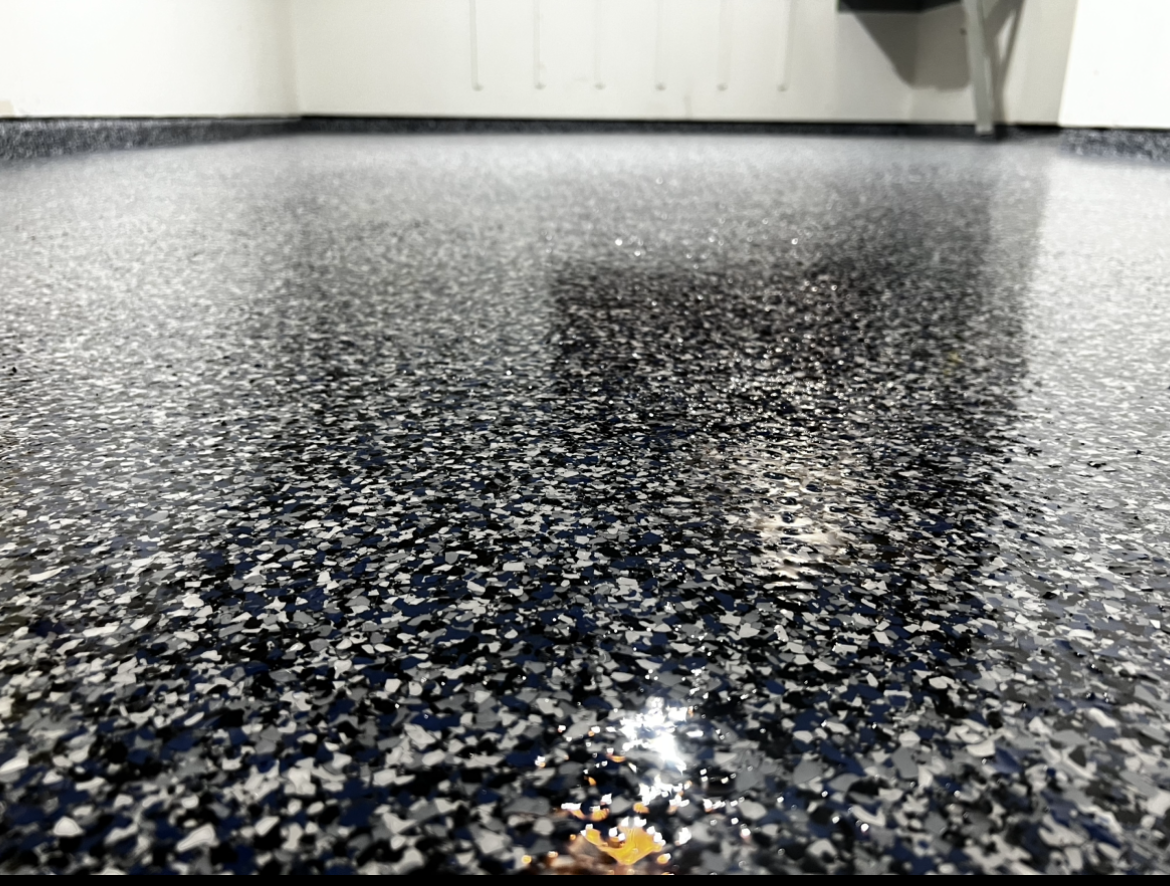
Standard epoxy formulations contain aromatic compounds that react with UV light, breaking molecular bonds and causing the yellowing and chalking visible on degraded coatings. UV-resistant systems replace these with aliphatic compounds that resist photodegradation, maintaining both color integrity and surface hardness throughout years of sun exposure. Fade-resistant outdoor finishes incorporate UV absorbers and hindered amine light stabilizers that intercept and dissipate UV energy before it reaches the underlying coating layers.
Once the coating cures, your outdoor concrete no longer absorbs water that causes efflorescence and surface deterioration. Rain and irrigation water sheet off the surface rather than soaking in, and the coating's thermal reflectivity reduces surface temperatures compared to bare concrete. Custom decorative outdoor designs remain vibrant without the color shifting and fading that occurs with pigmented sealers, and the surface maintains traction even when wet.
Driveway and walkway resurfacing extends beyond aesthetics—the coating seals existing surface cracks and prevents them from widening under thermal stress. The system flexes with the concrete's expansion and contraction cycles without delaminating, and it resists staining from organic debris, mildew, and tannin leaching from surrounding vegetation.
Common Questions About This Service
Property owners considering outdoor epoxy coatings typically want to understand how these systems hold up under Florida's weather conditions and what differentiates them from standard sealers.
What causes outdoor coatings to fail in Punta Gorda's climate?
UV radiation breaks down aromatic epoxy compounds, while thermal cycling stresses the bond between coating and substrate. Moisture intrusion from Florida's humidity and rainfall can cause delamination if the concrete wasn't properly prepared or if the coating lacks sufficient moisture vapor tolerance.
How do UV-protected systems maintain their appearance over time?
Aliphatic topcoats chemically resist UV degradation, and the pigments used are inorganic compounds that don't fade under sunlight. The coating's gloss retention depends on additives that prevent surface chalking, keeping the finish reflective and visually consistent for years.
What maintenance do outdoor epoxy surfaces require?
Periodic cleaning with water and mild detergent removes organic buildup and maintains traction. Unlike porous concrete, the sealed surface doesn't trap dirt or support mildew growth, so cleaning frequency depends mainly on surrounding landscape debris rather than inherent surface degradation.
How does the coating perform during heavy rain events?
The sealed surface sheds water quickly, preventing pooling and the erosion that occurs when water sits on porous concrete. The coating's impermeability also prevents subsurface water from wicking up through the concrete and causing surface staining or spalling.
When is the best time to apply outdoor coatings in this area?
Lower humidity periods and stable temperatures produce optimal curing conditions. Application during Florida's drier months allows the coating to develop full chemical resistance before exposure to summer's intense heat and afternoon thunderstorms, though proper surface moisture testing allows installation year-round when conditions are controlled.
APM Epoxy Flooring installs weather-resistant coating systems across Punta Gorda's outdoor concrete surfaces using formulations engineered for subtropical exposure. Contact us at (609) 500-1106 to discuss your outdoor flooring project and review coating options that match your site's specific conditions.