Barrier Systems That Stop Moisture Before Coating Failure
MVB Epoxy Flooring Systems in Punta Gorda for concrete slabs with moisture vapor transmission that threatens coating adhesion
Concrete slabs in Florida release moisture vapor that migrates upward and accumulates beneath epoxy coatings, creating pressure that eventually causes delamination and bubbling. Moisture vapor barrier installations address this issue by applying specialized resin systems designed to tolerate high vapor transmission rates without losing bond strength. APM Epoxy Flooring installs MVB systems in Punta Gorda for commercial and industrial properties where standard coatings have failed or where moisture testing reveals transmission levels that exceed what conventional epoxy can handle.
The installation involves applying a moisture-tolerant primer that chemically bonds to damp concrete, followed by barrier layers that block vapor migration while allowing the concrete to breathe at controlled rates. This approach prevents the substrate pressure that leads to coating lift and surface defects.
Arrange an on-site moisture test to determine vapor emission rates and whether your slab requires a barrier system.
What Proper Moisture Mitigation Requires
Installing a moisture vapor barrier begins with calcium chloride or relative humidity testing to quantify how much moisture the slab emits over a 24-hour period. If transmission exceeds three pounds per 1,000 square feet or if relative humidity inside the slab measures above 75 percent, a standard epoxy system will likely fail within months. The MVB resin is formulated to remain flexible under vapor pressure, which prevents the brittle cracking that occurs when rigid coatings are applied over wet concrete.
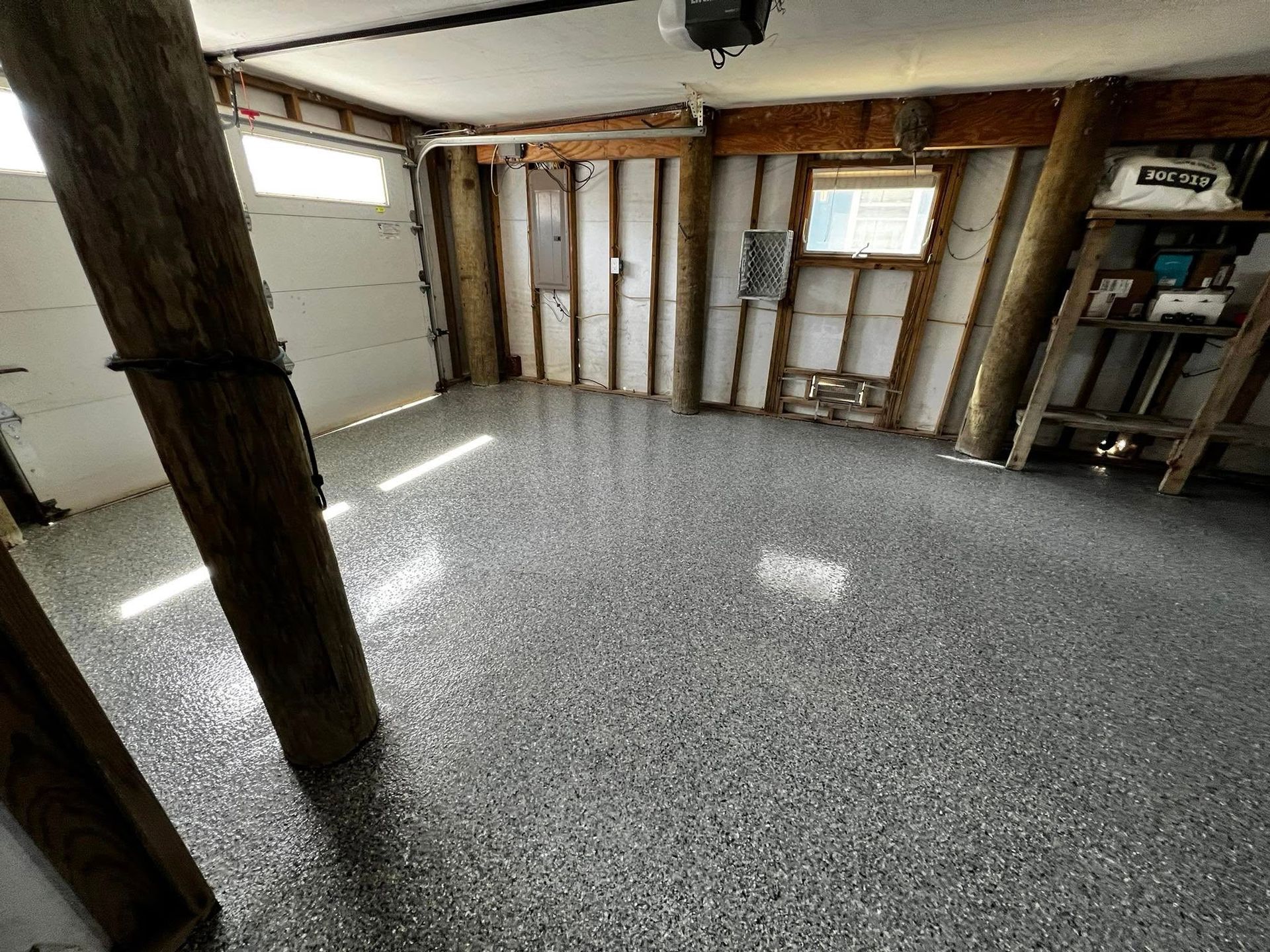
After the barrier cures, the floor no longer exhibits the soft spots, tackiness, or bubbling that indicate trapped moisture. Coatings applied over the barrier system remain bonded even as seasonal humidity fluctuates, and the surface stays dry to the touch without the condensation issues that plague untreated slabs in coastal environments.
The system does not stop water from entering the concrete from below; it manages the vapor that escapes upward so that topcoats remain intact. Properties with active groundwater intrusion or hydrostatic pressure require drainage corrections before any coating system is installed.
Answers to Frequent Service Questions
Contractors and facility managers often need clarity on when moisture barriers are necessary and how they integrate with existing floor plans.
How do you know if a concrete slab needs a moisture vapor barrier before coating?
Conduct a moisture test using calcium chloride kits or in-slab probes; if vapor emission exceeds manufacturer limits for the intended topcoat, a barrier system is required to prevent adhesion failure.
What happens if you apply standard epoxy over a slab that later develops moisture issues?
The coating will delaminate in patches, bubble, or remain tacky indefinitely, requiring full removal and reinstallation with proper moisture mitigation in place.
When is a moisture vapor barrier used in industrial facilities versus residential garages?
Industrial applications involve higher vapor loads due to slab thickness and ground moisture, while residential garages in Punta Gorda may need barriers if the concrete was poured without vapor retarders or if the water table is high.
What is the difference between a moisture vapor barrier and a waterproofing membrane?
A vapor barrier manages moisture transmission rates to protect coatings, while waterproofing membranes are designed to stop liquid water intrusion, which requires different materials and installation methods.
How long does it take for a moisture vapor barrier to cure before the topcoat can be applied?
Most MVB systems require 24 to 48 hours of curing time depending on temperature and humidity, though some rapid-cure formulations allow topcoat application within 12 hours.
APM Epoxy Flooring evaluates substrate conditions and moisture levels before recommending a coating approach. Request a moisture assessment and system proposal specific to your facility requirements.