
High-Traffic Surfaces That Stay Presentable
Commercial Epoxy Flooring in Punta Gorda for retail stores and restaurants with constant foot traffic
Retail store epoxy flooring must maintain appearance under conditions that destroy conventional floor finishes within months—shopping cart wheels concentrating hundreds of pounds onto small contact patches, merchandise displays being dragged across surfaces, and spills that sit until staff notice them. Restaurant and hospitality flooring faces grease, acidic liquids, thermal shock from dropped hot cookware, and cleaning chemical exposure several times daily. APM Epoxy Flooring installs commercial-grade systems engineered to handle these specific load and contamination patterns while maintaining a professional appearance that doesn't broadcast wear patterns or require constant refinishing.
The coating system uses high-solids epoxy formulations that cure into impact-resistant surfaces, with topcoats selected based on each facility's specific wear patterns and maintenance capabilities. Office building floor coatings prioritize chemical resistance to cleaning products and rolling chair traffic, while warehouse epoxy systems emphasize abrasion resistance from pallet jacks and forklift wheels.
Request a facility assessment to review your floor traffic patterns and discuss coating systems designed for your specific commercial application.
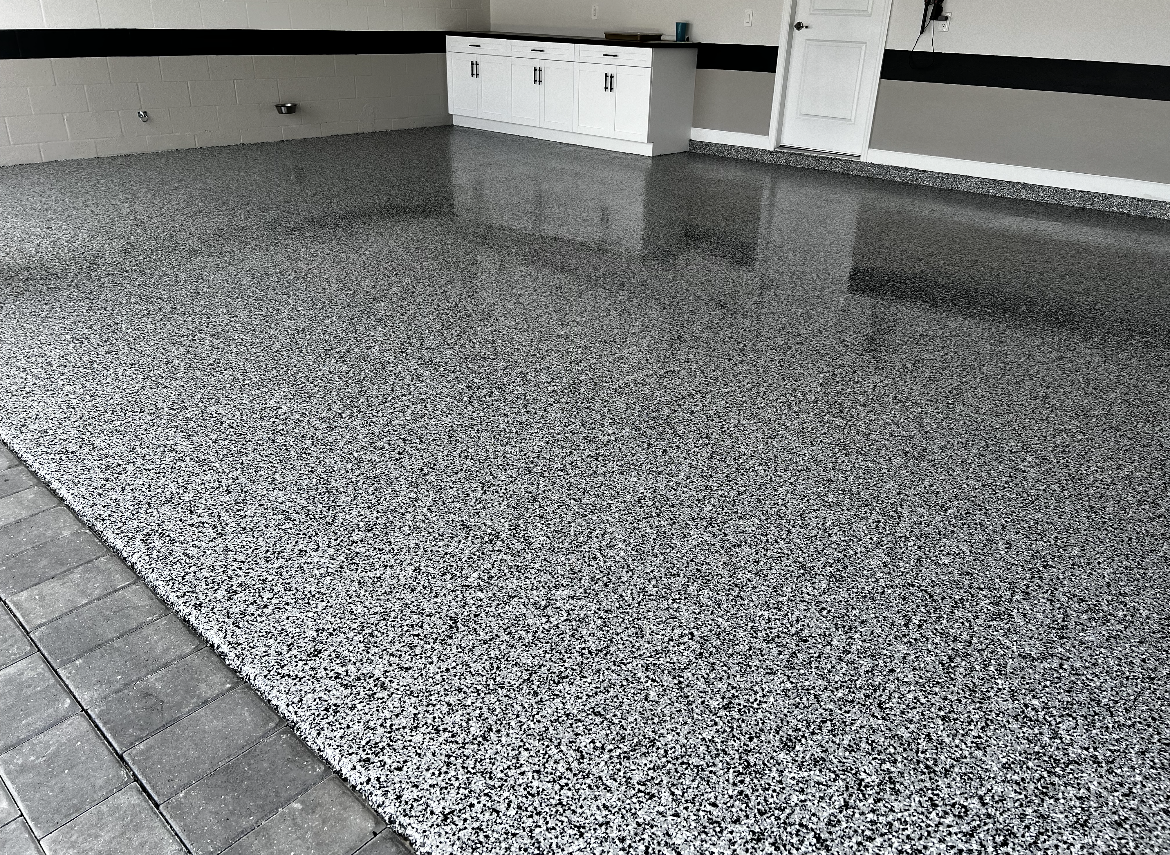
What Changes After Commercial Coating Installation
Commercial epoxy installations create seamless surfaces without the grout lines that trap debris in tile installations or the joints that fail in VCT flooring. The monolithic surface eliminates hiding places for bacteria and simplifies cleaning protocols because there are no seams to scrub or edges to lift. High-traffic commercial surfaces develop their wear resistance from the coating's cross-linked polymer network, which distributes point loads across the substrate rather than concentrating stress on surface layers that chip or flake.
Your facility's floor stops generating maintenance calls for cracked tiles, lifted edges, or grout discoloration. Spills wipe clean without staining, and the floor's appearance remains consistent across the entire surface rather than showing traffic lanes where finish has worn away. Low-maintenance flooring solutions reduce labor costs because the sealed surface needs only routine mopping rather than periodic stripping and refinishing, and the floor continues performing without replacement for years beyond what conventional finishes deliver.
The coating thickness and aggregate loading are calibrated to each space's requirements—showroom floors receive high-gloss finishes that maximize light reflection, while back-of-house areas get textured surfaces that maintain slip resistance when wet. Color and design options allow floor surfaces to function as wayfinding elements or brand expression without compromising durability.
Questions Before Starting Your Project
Business owners evaluating commercial flooring options typically need to understand installation timelines, performance expectations, and how epoxy compares to alternative flooring systems.
How long does a commercial space need to stay closed for installation?
Surface preparation and coating application typically require 24 to 48 hours depending on space size, with additional cure time before the floor can handle full traffic loads. Most installations are scheduled during off-hours or planned closures to minimize business disruption, and fast-cure formulations can reduce downtime when necessary.
What differentiates commercial-grade epoxy from residential systems?
Commercial formulations include higher abrasion resistance ratings, increased chemical resistance to industrial cleaning products, and impact resistance tested under load conditions that exceed residential traffic. The material specifications reflect the reality that commercial floors experience continuous rather than intermittent use.
How does epoxy flooring perform in Punta Gorda's humid commercial environments?
The coating is impermeable to moisture vapor, preventing the humidity-related issues that cause tile delamination and VCT curling in Florida facilities. The surface doesn't support mold or mildew growth, and it maintains structural integrity regardless of ambient humidity levels.
What factors affect commercial flooring costs?
Square footage, surface condition requiring repair, coating system complexity, and installation timeline constraints all influence project pricing. Decorative elements, custom colors, and specialized topcoats add to base costs, while straightforward solid-color applications over sound substrates represent the most economical installations.
How do you maintain commercial epoxy floors?
Routine dust mopping and damp mopping with pH-neutral cleaners handle daily maintenance. Unlike waxed floors, epoxy doesn't require periodic stripping and refinishing—the surface itself provides the gloss and protection rather than relying on sacrificial coatings that wear away.
APM Epoxy Flooring delivers commercial flooring installations across Punta Gorda using systems matched to each facility's traffic patterns and operational requirements. Reach out at (609) 500-1106 to discuss your commercial flooring needs and schedule a site evaluation.