Surfaces Built to Survive Equipment Loads
Industrial Epoxy Flooring in Punta Gorda for manufacturing facilities where forklifts, pallet jacks, and machinery subject floors to continuous impact
Forklifts turning at high speeds create lateral forces that peel standard coatings away from concrete, while dropped tools and dragged pallets gouge surfaces that lack sufficient hardness. Industrial-grade epoxy systems are formulated with higher solids content and thicker mil builds to absorb these impacts without chipping or delaminating. The installation protects concrete substrates in warehouses, production lines, and heavy equipment zones where foot traffic is secondary to machinery operation.
APM Epoxy Flooring installs chemical-resistant floor coatings designed for manufacturing environments in Punta Gorda, where oils, solvents, and cleaning agents contact the surface daily. The resin chemistry resists degradation from these substances, preventing the softening and discoloration that occurs when standard coatings are exposed to industrial fluids.
Schedule a facility walkthrough to identify high-wear zones and chemical exposure points that determine coating specifications.
What Industrial Epoxy Systems Actually Accomplish
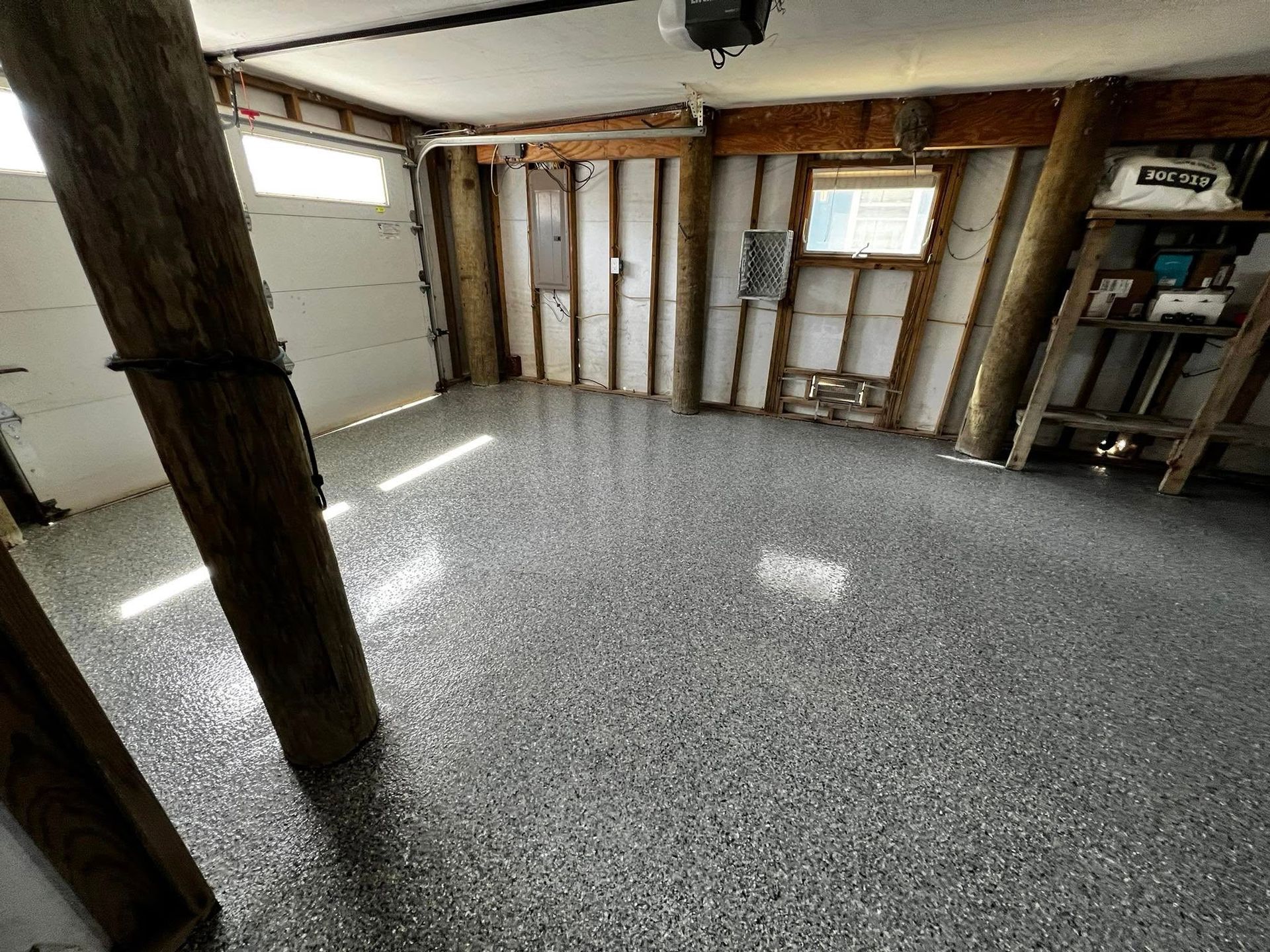
Industrial installations begin with diamond grinding to remove laitance, open the concrete pores, and create the surface profile needed for mechanical bond strength. The epoxy is applied in multiple coats, with aggregate broadcasted into the base layer to increase slip resistance and impact tolerance in areas where metal parts or liquids are present. Safety-focused flooring solutions often include colored striping applied during the final coat to mark walkways, hazard zones, and equipment staging areas.
Once cured, the floor withstands forklift tire marks, hydraulic fluid spills, and the repetitive abrasion of carts rolling across the same paths without wearing through to the concrete. The surface remains level and free of the cracks and joint deterioration that develop in untreated slabs subjected to heavy loads. Cleaning becomes faster because oils and residues do not penetrate the sealed surface, allowing spills to be wiped or mopped without staining.
Large-scale facility installations may involve multiple coating zones with different performance characteristics, such as higher chemical resistance near wash stations and increased impact tolerance in shipping bays. Coordination with production schedules is required to cure sections without halting operations across the entire facility.
Common Questions About This Service
Facility managers evaluating flooring options for industrial spaces frequently ask about durability standards and maintenance after installation.
What makes industrial epoxy different from residential garage floor coatings?
Industrial systems use higher resin solids, thicker application layers, and chemical-resistant formulations that withstand solvents and oils, while residential products prioritize aesthetics and light-duty abrasion resistance.
How does the floor handle thermal expansion in metal fabrication or welding areas?
Epoxy formulations for high-heat zones include additives that maintain flexibility during temperature cycling, preventing the cracking that rigid coatings experience when the substrate expands and contracts.
When should you recoat an industrial epoxy floor to maintain performance?
Recoating is needed when the surface shows visible wear patterns, loss of gloss in high-traffic lanes, or when chemical exposure has etched the topcoat enough to reduce stain resistance.
What preparation steps are required before installing epoxy in an active manufacturing facility?
The concrete must be clean, dry, and free of oils or curing compounds, which often requires shot blasting or grinding followed by solvent wiping in areas with existing contamination.
How do safety striping and markings hold up under forklift traffic in Punta Gorda warehouses?
Striping applied during the topcoat phase becomes part of the sealed surface rather than sitting on top, which prevents the peeling and fading that occurs with painted or taped floor markings.
APM Epoxy Flooring provides industrial coating systems engineered for the specific loads and exposures your facility experiences. Request a detailed proposal that includes surface preparation, coating specifications, and project phasing.